
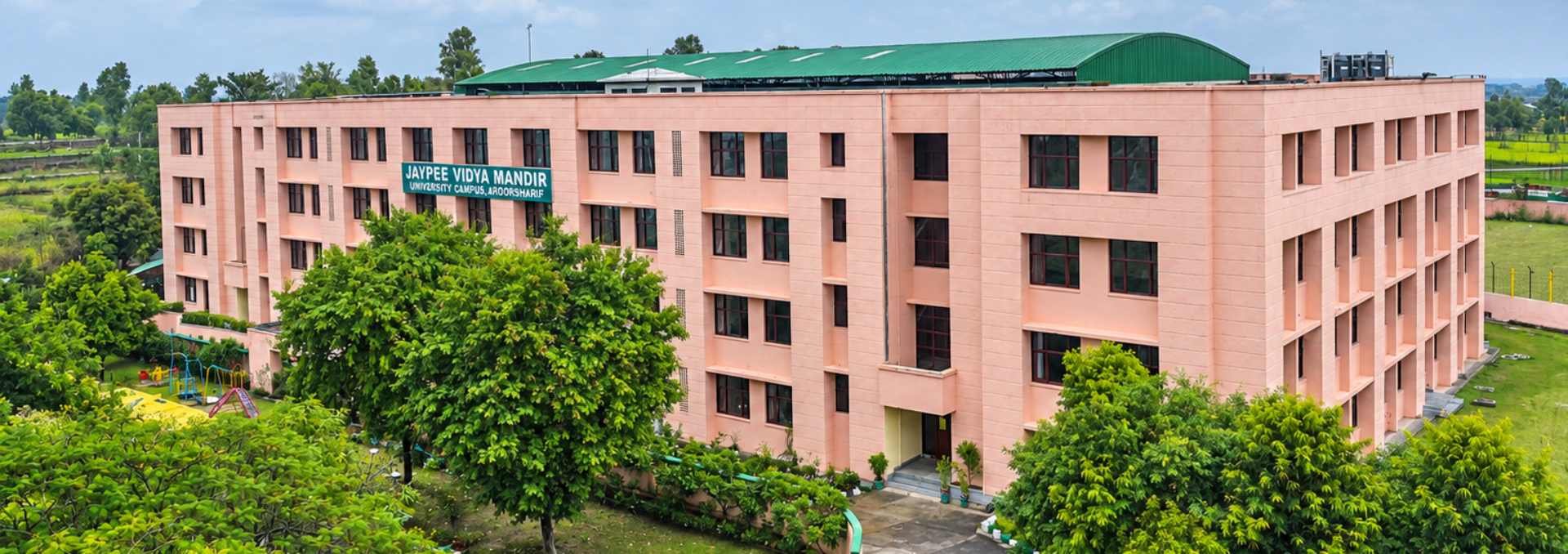
The Jaypee Group of Companies has consistently displayed full awareness of its social responsibilities through the Jaiprakash Sewa Sansthan (JSS), a ‘not-for-profit’ Trust registered under the Income Tax Act, 1961. It has been established to discharge its responsibility towards society. The Sansthan functions with a holistic approach for overall socio-economic development. Set up in 1993, the trust aims to reduce the pain and distress in society. The Group firmly believes that Education is the cornerstone of economic development, and the strength of 1 billion Indians can be channelized by education alone to build India into a developed nation. The Group currently offers education through 32 schools, 7 ITCs, 1 Polytechnic, 1 Post Graduate College, 1 B. Ed College and 4 Universities catering to over 30,000 students and has an objective to equip at least 1 lac students with the power of education by 2020.
JSS has translated its social responsibility into reality by building up schools and training institutes that cater to the needs of providing quality education to the rural masses. The Comprehensive Rural Development Programme (CRDP) covers a wide range of projects such as free medical camps, health check-ups for village school children, literacy campaigns, safe drinking water supply, creating water reservoirs in villages, and vocational training for women. Further, green initiatives include afforestation drives, conservation of natural resources, emphasis on controlling air quality and noise pollution.
With the thought of using technology effectively for economic growth, the visionary founder of the JSS, Shri Jaiprakash Gaur set up 4 higher technical universities – Jaypee Institute of Information Technology University (JIIT), Noida; Jaypee University of Information Technology (JUIT) at Waknaghat, Himachal Pradesh; Jaypee University of Engineering & Technology (JUET) at Guna, Madhya Pradesh and Jaypee University Anoopshahr (JUA) Distt: Bulandshahr Uttar Pradesh – to host the best of faculty, students and educational infrastructure to ensure creation, generation, dissemination and application of knowledge to mould the world leaders of tomorrow.
The four institutes have been envisioned to reflect the motto “Education, Empowerment and Enlightenment”. The institutes strive to bring innovation, creation, and flexibility to the curriculum through credit and non-credit courses, open-ended projects with emphasis on problem-solving through experimentation and design exercises, and creative and challenging home assignments. They also have sufficient orientation to international competitiveness, quality management, and problem-solving in different socio-political and economic environments. Special features include the development of entrepreneurial skills, strong industry orientation, and experience of working in interdisciplinary teams.